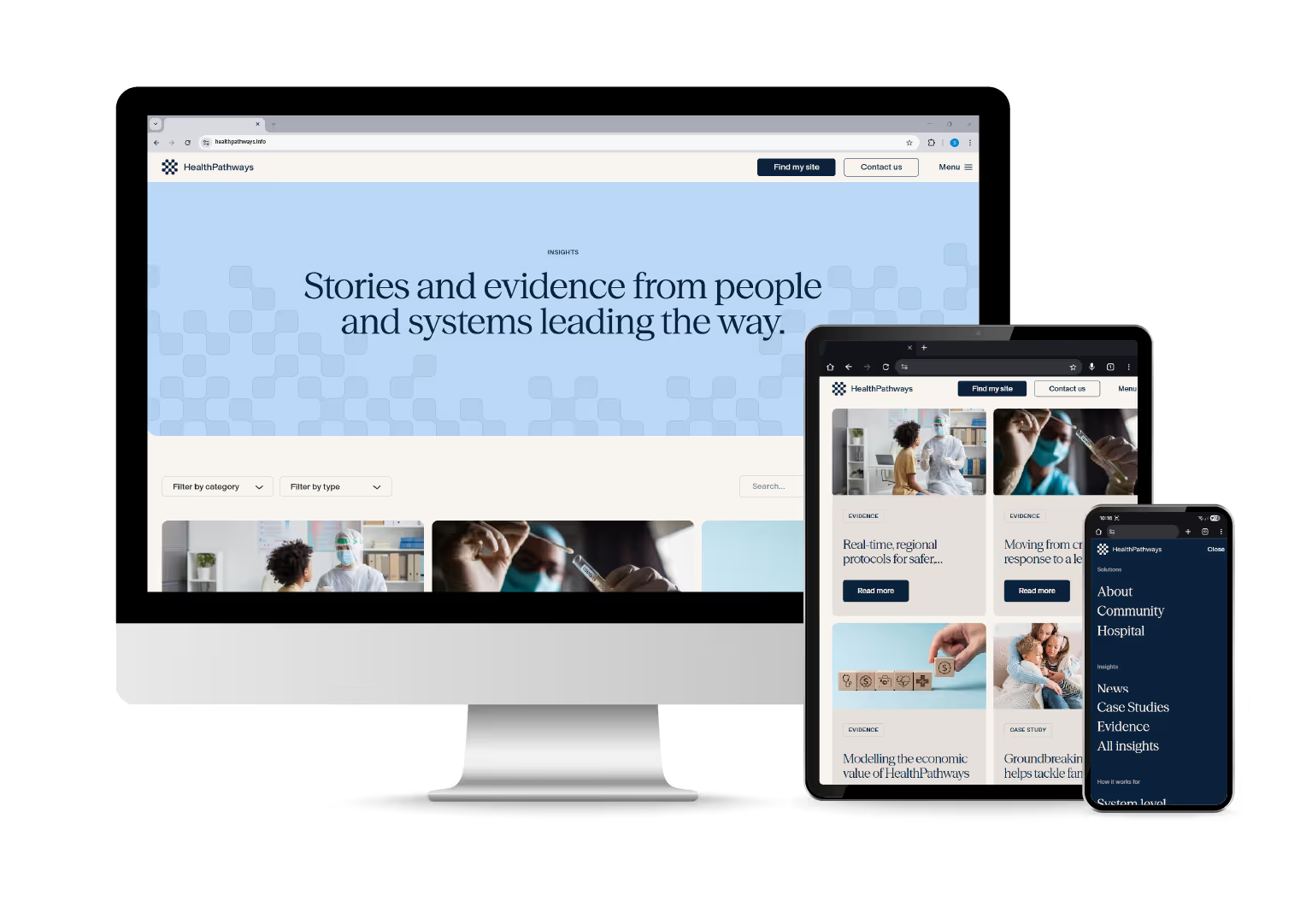
From evidence to every encounter: HealthPathways in Ontario

From evidence to every encounter: HealthPathways in Ontario

HealthPathways Ontario · November 2026

Attachment opens the door to care. Ontario realizes its value in what happens next.

Mike Weiss

From the CEO

Attachment is the first step. Its value depends on what happens next.

Mike Weiss

Chief Executive, Streamliners

Ontario has connected more than 511,000 people to a family doctor or primary care team since 2025.1 Nearly 90% of Ontarians now have access to primary care, and the province plans to attach everyone by 2029.2,3 Ontario is also moving referrals online and introducing Central Intake.

These investments pay off when the next step works. A newly attached person needs coordinated care from the whole team, a referral that reaches the right service the first time, and support to reach community and social services. Done well, and with the enabling conditions and infrastructure, each primary care team functions as a neighbourhood health home, providing comprehensive, coordinated and people-centred care.

Every community is different. Rural, urban and Indigenous communities across the province each have their own goals, needs, preferences, availability of services and distances to care. For many people, housing, income or caregiving shape what happens next as much as a diagnosis does. The next steps along a care pathway that are agreed locally, with social and medical complexity in view, are how attachment becomes better population health.

Today the system struggles at this point. Primary care teams describe declined referrals and community services that go unused. Only 61.5% of primary care network clinicians feel confident helping patients reach social services.4 Much of the knowledge of who to call is informal, and 52% of family doctors are considering retirement within five years.5

HealthPathways keeps this local knowledge in one place, in a durable form that responds as services and evidence change. The opportunity in Ontario is to take what three Ontario Health Teams have built since 2024 as the foundation.

Canterbury, New Zealand, where HealthPathways began, used 30% fewer acute medical bed days than the national average,6 and in Wales one health board recorded 12.2% fewer referrals.7

Our ambition is for HealthPathways to be the trusted source of how care works in every community it serves, so health systems can put evidence and policy into practice at every encounter. We want to build on the Ontario foundation with primary care providers and the wider health system for better health outcomes.

What HealthPathways is

HealthPathways is an online source of care pathways co-designed by local providers, available to all local providers in that region. Primary care, specialists and community providers agree each pathway for their area and keep it current. Providers open a pathway during the consultation to decide the next step: who does what, when, where and with what information.

Inside every pathway

AssessmentHistory, examination, red flags
ManagementWhat primary care does first
ReferralWhen, where and criteria
Local servicesSpecialist, community and social services
ResourcesFor patients and caregivers
Daily updatesWhat changed locally

In partnership with

No items found.
No items found.
01 · The opportunity

Ontario’s investment sees value in what happens next

511,000+Ontarians connected to a family doctor or primary care team since 20251
200+interprofessional primary care teams funded since 2024, with about 78 more to come3
52%of family doctors are considering retirement within five years5
61.5%of clinicians feel confident helping patients reach social services, against 81.7% for health services4

More people attached and more teams mean more next steps. The 511,000 people newly connected to primary care and the 200+ funded teams will all need clear routes for chronic disease care and referral. These teams have the opportunity to function as neighbourhood health homes, with specialists, home and community care and social services around the person. The core infrastructure to support that is shared clinical guidance and referral pathways that are hyper local.

Informal knowledge and relationships are being lost just as new teams are being built. With 52% of family doctors considering retirement, years of knowing who to call, and the working relationships behind that knowledge, will leave with them. Only 61.5% of clinicians feel confident connecting patients to social services. Teams describe referrals declined without explanation and the same referral sent to several places.

HealthPathways gives every team the same local information: clinical guidance in line with provincial standards, who to refer to for each condition, and what the referral needs. When care can safely stay in primary care or the community, the pathway says so.

How HealthPathways fits into Ontario’s digital investments

Agree the next step

HealthPathwaysManage here or refer? What first? Which service? What does the receiver need?

Refer

eReferralHealthPathways shows who to refer to for each condition, with the information needed for a high quality referral

Route

Central Intake or receiverScreen, triage, accept or decline

Care

Specialty and hospital careAssess, treat, return to primary care
ConnectAlongside every step
Community and social services: home care, caregiver supports, housing, income and mental health supports, and social prescribing, so comprehensive services wrap around the goals, needs and preferences of each patient

The golden triangle of clinical AI

Every clinical encounter draws on what medicine knows, what is known about the patient, and how care works here.8 AI tools now bring the first two into the consultation. The third has to be agreed locally and kept current. HealthPathways is the durable mechanism to make this possible and to spread and scale it.

TheencounterWhat medicine knowsGlobal evidence, now through AIThis patientThe record andthe conversationHow care works hereThe local agreementHealthPathways holds

Heidi and HealthPathways

In September 2026, Heidi and HealthPathways partnered to bring local care pathways and referral routes into Heidi Evidence. Ontario clinicians now see HealthPathways guidance in their documentation workflow.9

“A clinician doesn’t just need to know what’s clinically correct, they also need to know what’s actually available to the patient in front of them in their local area… HealthPathways brings that additional value to the Evidence platform, by making sure the clinician’s local guidance is there when they need it.”

Dr. Thomas Kelly, Co-Founder and CEO, Heidi
02 · Ontario’s foundation

Three Ontario Health Teams have built the foundation for scale

Burlington, Greater Hamilton and Middlesex London serve more than 1.3 million people, from city neighbourhoods to rural townships and First Nations communities. In November 2024 they launched HealthPathways together, the first implementation in North America.10

101care pathways tailored locally in 20 months, against 2 before11
685localized clinical pathway and referral pages
5 daysto update a pathway after the new provincial standard for major depression was released
17,250page views by clinicians

The OHTs use HealthPathways as core system infrastructure for local service design, service delivery and communication. Every service provider in the region can access and use it, including primary care teams, system navigators, pharmacists, specialists, community providers, emergency physicians, social workers and many more. For many conditions, it is the first time specialists, primary care and community providers have discussed models of care together, at a hyper local level. COPD, heart failure and depression were among the first pathways to go live, in line with Ontario’s chronic disease and mental health priorities.12

Clinicians use HealthPathways as a one stop shop. Pathways follow the latest Ontario Health quality standards. Across the three OHTs, the Daily Updates page is used for communication, with links to key assets and resources such as Evidence2Practice and public health alerts.

An investment in Ontario’s future

The three OHTs are early in their implementation journey. Their work so far has focused on investment and building. In Canterbury and Wales, system results came as the work matured over several years.

“Community HealthPathways is an extremely important puzzle piece to get aligned clinically with your patients and other healthcare professionals.”

Greater Hamilton Health Network13

“HealthPathways was so useful to review red flags, initiating treatment and planning follow up.”

Greater Hamilton Health Network13

Imagine Ontario

Every integrated primary care team starts with shared local guidance on who does what, when and where. Referral management is built into the clinical workflow, and community and social services stay current in the same place. As evidence, practice, care models and health system structures change, the pathways change with them, giving Ontario a durable and responsive system of care.

An invitation

Ontario Health, the Ministry of Health, the Primary Care Action Team and provincial digital partnersMake locally agreed pathways part of what every new and existing primary care team receives, and connect HealthPathways with the primary care EMR, digital referral, Central Intake and AI tools.
Primary care networks, OHTs, specialists, and community and social service partnersBuild on the pathways the three OHTs have already developed, co-design the agreements that matter most in your community, and keep service information current in the source clinicians use.

Reach out to learn more

Samantha Laxton

Director of Strategic Partnerships, Streamliners · samantha.laxton@streamliners.com

Samantha Laxton
03 · Results at scale

What other health systems have achieved in maturity

Canterbury and Wales have used HealthPathways for years at the scale of a region and a country. Their results came as the work matured, with referring and receiving clinicians using the same locally agreed pathways.

Canterbury, New Zealand, is where HealthPathways began

In 2008 the region set out to run one health system on one budget, so family doctors and hospital specialists agreed how care should flow between them.14 With funded community options, general practice teams now care for more than 34,000 people a year at home or in the community who would otherwise need hospital care.6

The wait for a first specialist assessment fell from about 100 days to 35.14 A revised transient ischemic attack (TIA) pathway cut admissions from 69% to 35%, with no rise in strokes.15 Canterbury used 30% fewer acute medical bed days than the New Zealand average.6

Wales has used HealthPathways at national scale for four years

It commissioned HealthPathways once for the country, and each of its seven health boards adapted it locally. In Hywel Dda, referrals fell 12.2% across matched periods, with 14,253 fewer referrals and a fall in every GP cluster. Recorded inappropriate referrals for chest pain fell from 27.7% to 10.0%.7

Welsh primary care clinicians report the change in their own work. About 90% said pathways save them time finding guidance, 71.3% said pathways helped reduce rejected referrals and 63.8% reported fewer unnecessary tests. They valued pathways most for trainees, locums and unfamiliar referral routes. The evaluation found the most value where referring and receiving clinicians use the same pathway.7

“It helps avoid unnecessary referrals and directs patients to the correct department first time.”

Primary care clinician, Wales7

Results mapped to Ontario’s priorities

ResultWhat changed, and whereOntario priority
12.2%fewer referrals in Hywel Dda, Wales, an indicative C$4.8 million in released capacityAccess and wait times
6.5% to 2.6%recorded inappropriate referrals, Hywel DdaStandardized referral criteria
66%fewer MRI referrals for knee and spine, Cardiff and Vale, WalesImaging capacity
22.5 to 26.8 hof clinician time saved a day across 88 survey respondents, WalesReducing administrative burden
100 to 35 dayswait for a first specialist assessment, CanterburySpecialist wait times
30%fewer acute medical bed days than the New Zealand average, CanterburyHospital flow and ALC

What this could mean in Ontario

People and caregiversOne clear next step, shorter wait times, fewer repeat visits and declined referrals, and trusted local resources for families.
ProvidersLess time searching and chasing referrals, and more capacity to take on patients with complex needs.
The health systemShorter waits to see a specialist (Wait 1) and to start treatment (Wait 2), and more care close to home.

Sources

  1. CBC News. (2026, October 26). More than 511,000 Ontarians connected to family doctors since 2025: Health minister.
  2. Frequency News. (2026, October 28). Ontario says over half a million people connected to primary care.
  3. Government of Ontario. (2026). Ontario’s Primary Care Action Plan: 1 year progress update; and Ontario connecting 600,000 more people to a family doctor or primary care team (August 18, 2026).
  4. Health System Performance Network. (2026, October). Primary care network provider experience survey: Results for Ontario Health Teams.
  5. Ontario Medical Association. (2025, December 4). Ontario’s doctors release new data on family doctor shortage.
  6. McGeoch, G., Shand, B., Gullery, C., Hamilton, G., & Reid, M. (2019). Hospital avoidance: An integrated community system to reduce acute hospital demand. Primary Health Care Research & Development, 20, e144.
  7. Kathrens, M., & Davies, G. (2026). National evaluation of Community HealthPathways: Interim evaluation report. The TriTech Institute, Hywel Dda University Health Board.
  8. Kelly, D. (2026, June 10). The golden triangle of clinical AI. Eolas Medical.
  9. Firmin-Guion, G. (2026, September 1). Heidi and HealthPathways bring local clinical guidance to the point of care for Canadian clinicians. Heidi Health.
  10. Middlesex London Ontario Health Team. (2024, November 26). Ontario Health Teams bring HealthPathways to Canada [News release].
  11. Implementation Working Group. (2026). HealthPathways Ontario implementation data [Unpublished]. Burlington, Greater Hamilton and Middlesex London Ontario Health Teams, and Streamliners.
  12. Ontario Health. (2025). 2025/26 Ontario Health Team collaborative Quality Improvement Plan annual memo.
  13. Greater Hamilton Health Network. (2026). Annual report 2025 to 2026.
  14. Timmins, N., & Ham, C. (2013). The quest for integrated health and social care: A case study in Canterbury, New Zealand. The King’s Fund.
  15. Ardagh, M. (2026). A decade of an online clinical guidance platform for hospital clinicians: They use it, they like it and it makes a difference. New Zealand Medical Journal, 139(1631), 116 to 122.

© 2026 Streamliners. All rights reserved.

No items found.

Authors

No items found.

Related insights

Evaluating the impact of Community HealthPathways in Wales
Evidence

Evaluating the impact of Community HealthPathways in Wales

Read more
HealthPathways guidance now available through Heidi Evidence in Ontario
News

HealthPathways guidance now available through Heidi Evidence in Ontario

Read more
Australian care pathways consultation highlights strong support for unified approach
News

Australian care pathways consultation highlights strong support for unified approach

Read more
HealthPathways NEW

Subscribe to our newsletter

Sign up to receive the latest insights and evidence on health system improvement straight to your inbox.

Get in touch to see how Healthpathways can help you simplify systems and improve outcomes in health.

Get in touch